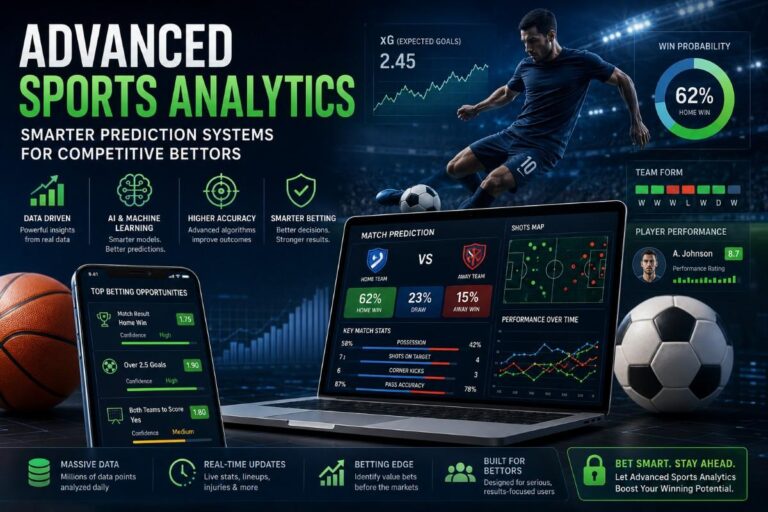
Advanced Sports Analytics — Smarter Prediction Systems for Competitive Bettors
In modern sports wagering, information matters. Competitive bettors no longer rely only on instinct or fan opinions. Today, Advanced Sports Analytics creates exciting opportunities for smarter, data-driven predictions. From player performance tracking to predictive modeling, Advanced Sports Analytics gives bettors powerful insights designed to improve confidence and decision-making.
As sports evolve, technology evolves too. Reliable prediction systems now combine historical statistics, real-time performance metrics, machine learning, and probability models. For competitive bettors, this creates a smarter, safer, and more informed experience.
This guide explores how Advanced Sports Analytics works, why it matters, and how trusted prediction systems are helping users make more confident sports decisions.
Why Advanced Sports Analytics Matters More Than Ever
Advanced Sports Analytics has transformed the way sports are analyzed. Instead of relying on simple win-loss records, modern systems examine deeper performance indicators such as:
- Team efficiency ratings
- Player consistency metrics
- Injury impact data
- Matchup history
- Possession statistics
- Weather and venue influence
- Momentum trends
Sports organizations themselves increasingly rely on analytics for performance improvement. Data analysis in sports has become widely accepted for optimizing strategy, evaluating player performance, and improving outcomes across professional leagues.
For competitive bettors, Advanced Sports Analytics means stronger insights and better decision support. Instead of emotional betting, users gain structured information designed to support smarter choices.
How Advanced Sports Analytics Powers Smarter Prediction Systems
The power of Advanced Sports Analytics comes from combining multiple data sources into meaningful predictions.
1. Historical Data Analysis
Every match creates valuable information. Historical statistics reveal patterns that traditional observation often misses.
A strong Advanced Sports Analytics system evaluates:
- Previous team meetings
- Win probability trends
- Home versus away performance
- Scoring patterns
- Defensive consistency
These insights help prediction systems recognize recurring behaviors and performance trends.
2. Real-Time Performance Tracking
Modern prediction systems update constantly. Instead of static numbers, Advanced Sports Analytics uses live data to adjust probabilities.
Examples include:
- Player injuries
- Team lineup changes
- Fatigue indicators
- Recent performance streaks
- Tactical changes
This real-time intelligence improves prediction quality and helps competitive bettors stay informed.
3. Predictive Modeling and Machine Learning
Machine learning has added a revolutionary layer to Advanced Sports Analytics.
Predictive systems now evaluate thousands of variables simultaneously. Rather than relying on guesses, algorithms estimate probabilities based on historical accuracy and statistical relationships.
These systems continuously improve over time as more sports data becomes available.
For competitive bettors, smarter prediction systems can highlight value opportunities while reducing emotional decision-making.
The Exciting Benefits of Advanced Sports Analytics
Improved Confidence
One major advantage of Advanced Sports Analytics is increased confidence. Data-driven insights reduce uncertainty and help bettors understand why predictions are made.
Confidence grows when decisions are based on verified statistics instead of speculation.
Smarter Risk Management
Competitive bettors understand that discipline matters.
Advanced Sports Analytics helps users identify stronger opportunities by analyzing probability rather than emotion. This can encourage more responsible and strategic decision-making.
Greater Transparency
Reliable analytics platforms explain how predictions are created.
Trustworthy systems often share:
- Statistical reasoning
- Confidence levels
- Key performance indicators
- Historical prediction accuracy
Transparency builds user trust and improves understanding.
Better Pattern Recognition
Human observation has limits. Analytics systems can identify hidden trends across thousands of matches instantly.
For example:
- A team may consistently underperform after short rest periods.
- Certain players may struggle in away games.
- Weather conditions may affect scoring patterns.
Advanced Sports Analytics makes these invisible details visible.
Key Metrics Used in Advanced Sports Analytics
Competitive bettors often encounter specialized metrics. Understanding them helps users maximize prediction systems.
Expected Goals (xG)
Popular in football, expected goals estimate scoring probability based on shot quality.
Instead of focusing only on final scores, Advanced Sports Analytics evaluates how likely scoring opportunities were.
Player Efficiency Ratings
These ratings measure overall player contribution and consistency.
They can reveal hidden strengths that standard statistics miss.
Possession Metrics
Possession analysis helps measure team control and game tempo.
In many sports, possession efficiency strongly influences outcomes.
Advanced Defensive Metrics
Defense matters just as much as offense.
Modern systems evaluate:
- Shot prevention
- Defensive pressure
- Turnover creation
- Opponent efficiency
These insights improve prediction accuracy.
Building Trust Through Reliable Sports Prediction Systems
Not every prediction platform deserves trust.
Reliable Advanced Sports Analytics systems prioritize transparency, data quality, and user education.
A trustworthy platform should clearly explain:
Who Creates the Analysis
Expert-created content improves credibility.
Sports analysts, statisticians, and data scientists often contribute to advanced prediction systems. Transparent authorship builds confidence.
How Predictions Are Produced
Users deserve clarity.
Reliable systems explain:
- Data collection methods
- Statistical models used
- Accuracy measurements
- Risk considerations
This supports informed decision-making.
Why Predictions Are Made
Ethical analytics focuses on helping users understand probability, not promising guaranteed outcomes.
No system predicts sports perfectly.
Even the best Advanced Sports Analytics relies on probabilities rather than certainty.
This honest approach increases trust.
The Future of Advanced Sports Analytics
The future looks exciting.
Artificial intelligence continues improving sports predictions through faster analysis and better modeling.
Emerging innovations include:
AI-Powered Match Simulations
Future systems may simulate thousands of game scenarios instantly.
This can create more accurate probability estimates.
Wearable Athlete Data
Fitness tracking technology provides deeper performance insights.
Heart rate, fatigue levels, and recovery data may eventually strengthen Advanced Sports Analytics systems.
Personalized Prediction Dashboards
Competitive bettors increasingly want custom experiences.
Future tools may personalize predictions based on:
- Preferred sports
- Risk tolerance
- Betting style
- Historical behavior
This creates smarter, more user-focused analytics.
How Competitive Bettors Can Use Advanced Sports Analytics Responsibly
The smartest bettors understand one important truth:
Analytics improves decision-making—but never guarantees outcomes.
To maximize value:
Focus on Long-Term Trends
Short-term results vary.
Advanced Sports Analytics works best when analyzing long-term patterns instead of single events.
Avoid Emotional Decisions
Emotion often creates mistakes.
Competitive bettors benefit when decisions align with trusted analytics rather than excitement or bias.
Verify Information Sources
Use transparent platforms with expert-backed research and clearly explained methodologies.
Trustworthy information supports better decisions.
Stay Educated
Sports analytics evolves quickly.
Learning how prediction systems work helps users gain more value from Advanced Sports Analytics tools.
Why Advanced Sports Analytics Is Changing Competitive Betting
The sports world is becoming smarter.
Competitive bettors increasingly value information, transparency, and statistical confidence. Advanced Sports Analytics offers a powerful way to understand games at a deeper level.
Instead of relying only on instinct, modern prediction systems combine expert research, statistical analysis, and technology to improve decision-making.
For users seeking smarter insights, Advanced Sports Analytics delivers exciting opportunities to understand sports with greater clarity and confidence.
The future of sports prediction belongs to informed decisions—and trusted analytics is leading the way.
Frequently Asked Questions (FAQs)
What is Advanced Sports Analytics?
Advanced Sports Analytics uses data science, statistics, and predictive modeling to evaluate sports performance and improve prediction systems.
How does Advanced Sports Analytics improve predictions?
It analyzes historical trends, player performance, matchup statistics, and real-time information to estimate probabilities more effectively.
Is Advanced Sports Analytics accurate?
No prediction system is perfect. However, trusted Advanced Sports Analytics tools improve decision-making by using probability-based models and large datasets.
Why do competitive bettors use Advanced Sports Analytics?
Competitive bettors use Advanced Sports Analytics to make more informed decisions, reduce emotional bias, and better understand sports performance trends.
Can beginners benefit from Advanced Sports Analytics?
Yes. Beginners can learn valuable sports insights through easy-to-understand analytics platforms and expert-backed prediction tools.
What makes a trustworthy sports analytics platform?
A trustworthy platform explains who created the analysis, how predictions are made, and why specific recommendations are provided. Transparency and expert input are key trust signals.